The Uneven Price of Prosperity: Cheap Chinese Imports and the Fracturing of the American Economy
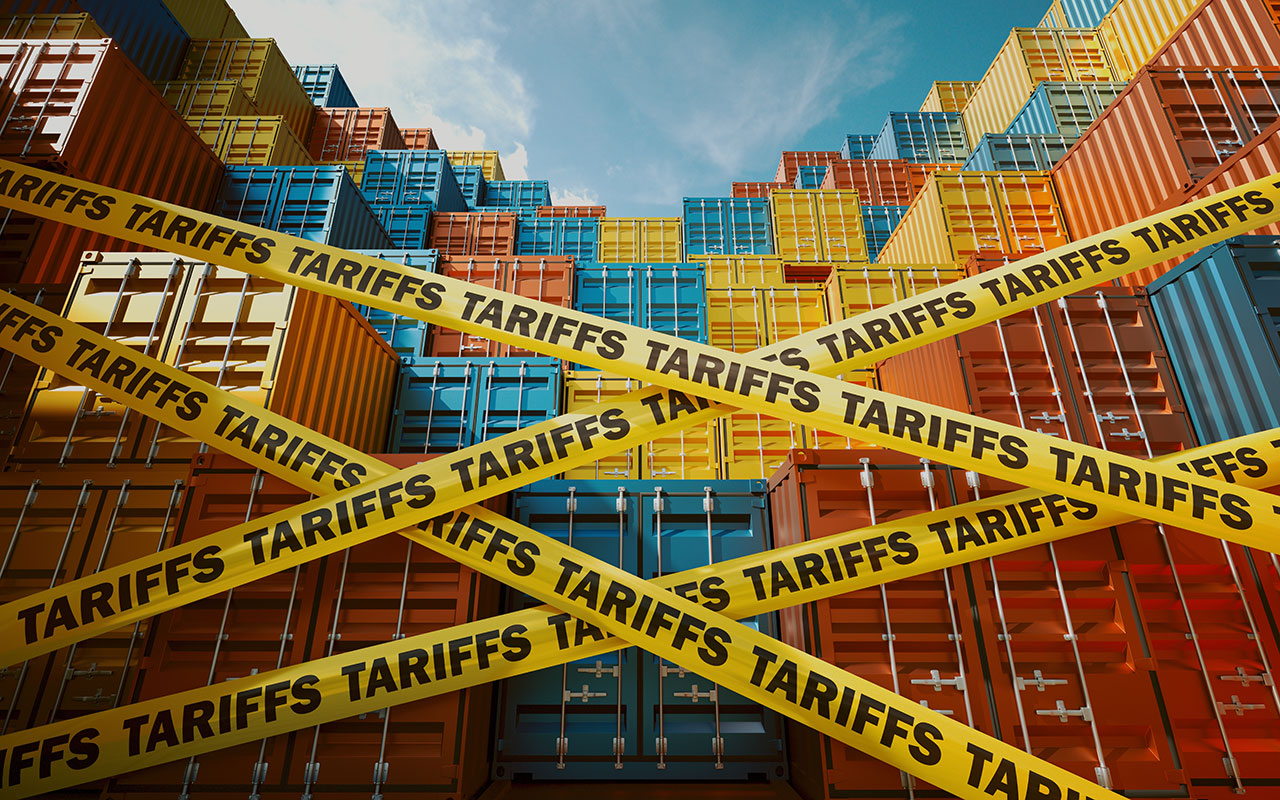
The Uneven Price of Prosperity: Cheap Chinese Imports and the Fracturing of
the American Economy
International Relations — Question 2
For much of the twentieth century, factories and textile mills helped many American
towns grow strong, especially in places like the Carolina Piedmont, where the textile
industry fostered economic growth and resilience. Over time, expanding trade with
China and the rise of cheap Chinese manufacturing changed communities across the
US in ways that are still being sorted out. It would be too simple to classify this
transformation as completely harmful or completely helpful. Cheap foreign imports
lowered prices, widened consumer choice, and reduced costs for some businesses. But
they also accelerated the decline of domestic manufacturing and placed the heaviest
burdens on communities with the fewest resources to respond — putting people out of
work and leaving entire regions to stagnate. Cheap imports from China represented an
uneven economic paradigm: real gains for consumers and some businesses, but
concentrated job loss, social strain, and long-term inequality in the places least
equipped to absorb the shock (Autor et al., 2013; Autor et al., 2016).
The Origins of the China Trade Shock
When the United States granted China Permanent Normal Trade Relations in 2000 and
supported its entry into the World Trade Organization in 2001, many policymakers
argued that the change would benefit both countries. American consumers were
expected to see lower-priced goods coming to market, Chinese workers to see
improved living standards, and U.S. companies to gain access to a rapidly expanding
1consumer market (Autor et al., 2016).
The effects were uneven from the start, and they depended heavily on class,
region, and industry. At the national level, lower import prices increased purchasing
power and reduced costs for businesses that relied on cheap inputs. At the regional
level, losses concentrated in manufacturing, which was most exposed to import
competition. The burdens and the benefits, in other words, were never distributed fairly
(Autor et al., 2013; Acemoglu et al., 2016).
Cheap imports from China did bring real benefits to the U.S. economy,
especially by lowering consumer prices. But those gains came with serious
consequences. A large body of evidence shows that import competition contributed to
manufacturing job losses, weakened local labor markets, and widened regional
inequality in communities that depended heavily on industrial work (Autor et al., 2013;
Acemoglu et al., 2016). Research by Autor, Dorn, and Hanson (2013, 2016) shows that
rising import competition from China contributed to major job losses in U.S.
manufacturing and lasting weakness in highly exposed local labor markets. Rather than
adjusting quickly, many regions experienced wage pressure, lower labor force
participation, and slow job replacement. Acemoglu et al. (2016) extend this argument
by showing that the effects reached beyond direct manufacturing losses into related
sectors of the labor market.
Consider the math on a low-priced table or appliance. The savings are real. But
they raise a harder question: who benefits immediately from affordability, and who
pays over time through weaker labor markets, lower wages, or fewer opportunities in
communities that were already fragile?
The Effects on Local Communities
2One flaw in many early defenses of trade was the assumption that local economies
would recover on their own. In theory, workers pushed out of one sector would move
into another, and regional labor markets would eventually rebalance. In practice, that
adjustment was far slower and more painful. People cannot always relocate easily,
communities cannot replace lost industries overnight, and local institutions often
weaken at the very moment economic strain grows most severe (Autor et al., 2016).
When a major manufacturing plant closes in a small city or town, the losses
spread far beyond the workers directly employed there. Take Kannapolis, North
Carolina, where the Pillowtex Corporation — once one of the largest textile employers
in the country — shut its doors in 2003, laying off more than 4,800 workers in a single
day. Local restaurants, suppliers, small businesses, and municipal governments all felt
it. The town lost wages, tax revenue, business activity, and confidence in its economic
future. Studies of highly exposed labor markets in the Midwest and South found that
factory closures often led to additional losses in surrounding service and business
sectors — the damage was cumulative, not isolated (Autor et al., 2013).
The effects were not only economic. In regions marked by long-term industrial
decline, researchers found increases in disability claims, family instability, substance
abuse, and premature death. Case and Deaton (2020) connect these patterns to 'deaths
of despair,' showing how economic dislocation can drive broader social and public
health collapse. Pierce and Schott (2020) further show that areas more exposed to trade
liberalization experienced higher mortality from drug overdoses. These are not
footnotes. They are the real cost of the trade shock.
Consumer Benefits and Unequal Costs
Supporters of free trade often emphasize benefits to consumers. And cheaper imports
did reduce the cost of many everyday goods — clothing, electronics, furniture (Autor et
3al., 2016). That is not nothing.
But those savings came with a serious tradeoff. Households supported by
professional or service-sector incomes often benefit from lower prices without facing
direct competition from imported goods. By contrast, many working-class households
in manufacturing regions saw wages fall and job security erode. That does not mean
China alone caused manufacturing decline — automation, domestic policy, and
corporate offshoring all played major roles. Still, import competition intensified those
pressures and deepened existing inequalities.
Defenders of trade openness point out that restricting imports can raise prices,
reduce consumer welfare, and invite retaliation that harms exporters and workers in
other sectors. That argument has real force. But aggregate efficiency is not the same as
economic justice. A policy cannot be considered successful if its benefits are widely
distributed while the harm is great, lasting, and concentrated in communities least
protected from economic trouble. The United States spread the rewards of trade
broadly while concentrating the costs of adjustment in a narrower set of places. That is
the central problem.
Policy Debate and Economic Response
More than two decades later, the United States is still debating how to respond.
Policymakers in both major parties have turned to tariffs, industrial subsidies, and
reshoring incentives, but these responses reveal a deeper tension. They acknowledge
that market adjustment alone did not protect vulnerable regions — and they show how
difficult it is to rebuild industrial ecosystems once firms, suppliers, and skilled workers
have dispersed.
In many former mill towns and industrial counties, recovery remains
incomplete. Even when new investment reaches these areas, it rarely restores the same
4number of jobs, wages, or civic stability that earlier manufacturing once provided.
The cost of cheap imports, then, cannot be measured only through lower retail
prices or national trade statistics. It must also be evaluated in terms of long-term
consequences for communities that have lost industries, tax bases, and a sense of
economic identity.
Recent trade policy has added another layer to this debate. In 2025, the United
States increased tariffs on Chinese goods and later reduced or suspended some of those
rates through temporary agreements. Official actions in May and November 2025
indicate that both countries were willing to pause further escalation, even as the broader
trade conflict remained unresolved (Executive Office of the President, 2025a, 2025b).
But the relationship remains unstable. Businesses continue to operate amid uncertainty,
changing tariff rules, and ongoing strategic rivalry between the two countries.
Tariffs may provide temporary protection for selected industries or create
leverage in negotiations. They do not automatically rebuild the manufacturing systems
that were lost. In the short term, they can raise costs for firms and consumers while
leaving deeper structural problems unresolved. Critics of unrestricted free trade argue
that some intervention may be justified if the alternative is continued dependence on
fragile global supply chains or the erosion of strategic industries. The policy debate is
not simply whether trade is good or bad, but which kinds of trade policy distribute risks
and benefits more fairly.
The Limits of Reshoring
A major goal of current U.S. policy is reshoring — bringing production back to the
United States. Signs of movement exist, but progress has been uneven, and the limits
remain significant.
5Some companies are reducing their dependence on China, but that does not
necessarily mean production is returning to American factories. Reporting in 2025
suggested that Apple planned to shift more U.S.-bound iPhone assembly to India by
2026, which shows that supply chains can move without moving back home
(Hardwick, 2025). A similar pattern appears across Asia. As tariffs and geopolitical
risk have risen, Chinese firms have expanded their footprint in countries such as
Vietnam — meaning the United States may continue to import low-cost goods through
shifted supply chains rather than seeing a full return of domestic production
(Guarascio, 2025).
The larger challenge is structural. Labor and operating costs in the United States
remain higher than in many Asian nations, so reshoring often depends on automation
and redesigned production infrastructure. Manufacturers also face labor shortages.
According to the National Association of Manufacturers (2025), 3.8 million
manufacturing positions could open by 2033, with nearly half remaining unfilled.
Reshoring is not a simple return to the industrial past. Even when production comes
back, fewer jobs will likely come with it.
Conclusion
Cheap imports from China brought real benefits to American consumers, but those
gains were not shared evenly across the country. Import competition weakened local
labor markets, widened regional inequality, and deepened social crises in communities
already under strain (Autor et al., 2013; Case & Deaton, 2020; Pierce & Schott, 2020).
And the issue cannot be reduced to a simple choice between free trade and
protectionism. The deeper failure was political as much as economic — the United
States allowed the rewards of globalization to expand broadly while leaving the costs to
fall on specific regions and populations with far less capacity to absorb them.
6So what does trade policy actually owe those communities? That question has
never been seriously answered.
Bibliography
Acemoglu, D., Autor, D., Dorn, D., Hanson, G. H., & Price, B. (2016). Import
competition and the great US employment sag of the 2000s. Journal of Labor
Economics, 34(S1), S141–S198.
Autor, D. H., Dorn, D., & Hanson, G. H. (2013). The China syndrome: Local labor
market effects of import competition in the United States. American Economic
Review, 103(6), 2121–2168.
Autor, D. H., Dorn, D., & Hanson, G. H. (2016). The China shock: Learning from labor
market adjustment to large changes in trade. Annual Review of Economics, 8,
205–240.
Case, A., & Deaton, A. (2020). Deaths of despair and the future of capitalism.
Princeton University Press.
Executive Office of the President. (2025a). [May 2025 tariff agreement with China].
Washington, DC: U.S. Government.
Executive Office of the President. (2025b). [November 2025 tariff agreement with
China]. Washington, DC: U.S. Government.
Guarascio, F. (2025). Chinese firms expand manufacturing in Vietnam amid rising
tariffs. [Source details to be confirmed].
Hardwick, T. (2025). Apple to shift U.S.-bound iPhone production to India by 2026.
[Source details to be confirmed].
7National Association of Manufacturers. (2025). Manufacturing workforce outlook
2033. Washington, DC: NAM.
Pierce, J. R., & Schott, P. K. (2020). Trade liberalization and mortality: Evidence from
US counties. American Economic Review: Insights, 2(1), 47–64.


Comments
Post a Comment